
Building the Operating Model Around Enterprise Drone Operations
How PAM helped move a multi-site automotive logistics program from proof of concept toward sustained, repeatable field operations.
The assignment was never just to fly.
Enterprise drone programs often begin with an aircraft, a software platform, and a compelling technical demonstration.
The harder work begins afterward.
A system that performs well during a proof of concept still needs an operating model around it. Someone must translate the technology into daily decisions, field procedures, safety controls, site-specific workflows, documentation, troubleshooting practices, staffing expectations, and clear lines of responsibility.
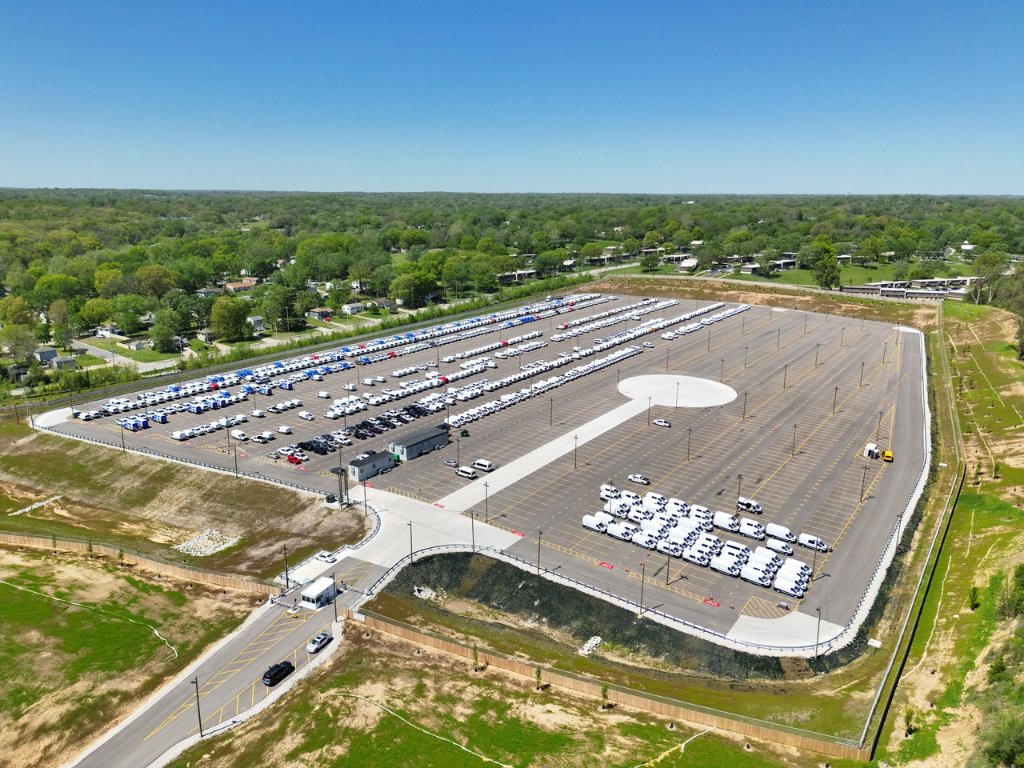
ProAerial Media became involved in a developing automotive-logistics drone program during an initial proof-of-concept deployment in Detroit.
That early field experience revealed an opportunity larger than flight execution. The program needed a practical bridge between enterprise strategy, remote mission technology, and the realities of operating at active vehicle yards.
PAM helped build that bridge.
From proof of concept to field-tested operating model.
Proof of concept and operating-model discovery
Initial field work revealed the gap between aircraft capability and repeatable enterprise operations. PAM began identifying the procedures, readiness controls, documentation, mapping, and field responsibilities required around the technology.
60-day sprint operating seven days per week
The developing model was tested under sustained daily field conditions at an active automotive logistics facility. Readiness, troubleshooting, reporting, handoff, and operational decision-making became part of the daily rhythm.
Compressed two-week daily operation
The workflows were adapted to a second active site and a different operating tempo, testing whether the operating model could travel, stabilize quickly, and support continuity beyond one familiar environment.
From technical demonstration to operational structure.
The initial Detroit work provided a direct view into how the proposed system would interact with live yard activity, site access, airspace, communications, aircraft readiness, ground risk, data requirements, and remote operational support.
After the proof of concept, PAM proposed a broader role supporting the program’s transition from isolated demonstration to repeatable deployment.
The operating concept divided responsibilities deliberately. The technology partner remained responsible for broader system design, enterprise risk strategy, and remote mission execution. PAM focused on the field layer surrounding those systems:
- —On-site RPIC support
- —Part 107 compliance
- —Airspace and authorization review
- —Operational risk assessment
- —Site readiness
- —Yard-level execution
- —Equipment checks and field troubleshooting
- —High-accuracy mapping and site documentation
- —Pilot procedures and training support
- —Incident readiness
- —Post-flight reporting and operational handoff
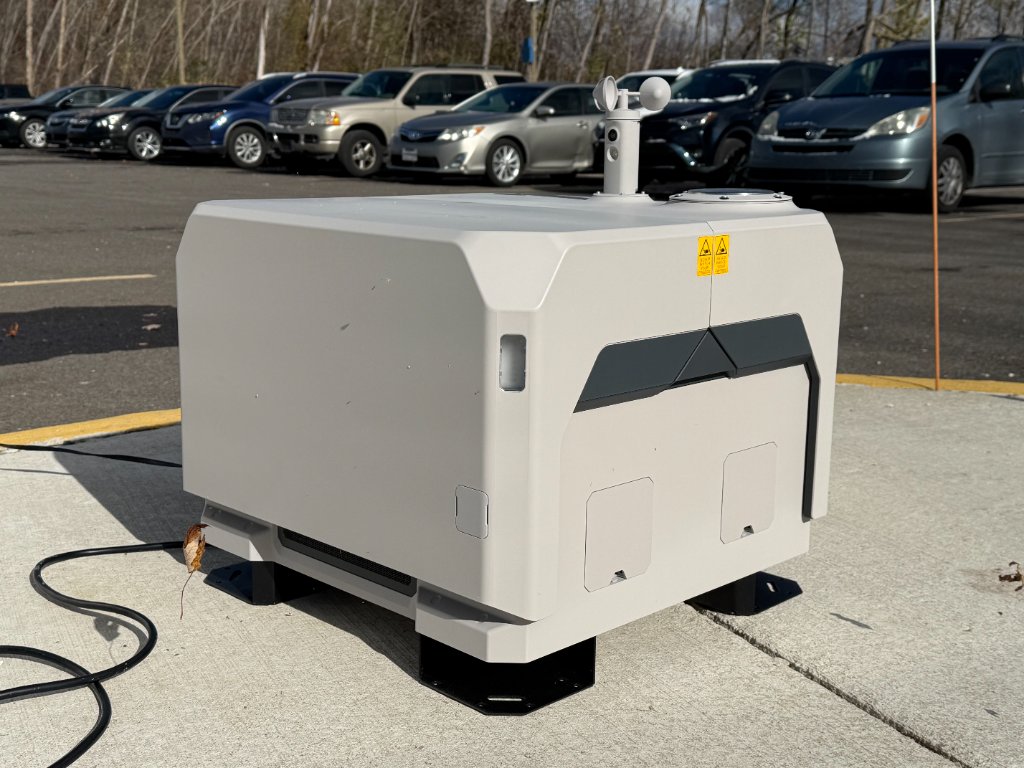
The goal was not to create another one-off drone project. It was to begin developing a repeatable, safety-centered operating pattern that could follow the program from one active yard to another.
Building the field layer around the aircraft.
The eventual operating agreement formalized much more than pilot coverage. It established a structured deployment model built around scheduled daily service windows, yard-based planning, compliance review, field execution, upload confirmation, exception-based communication, troubleshooting support, and provisions for operational continuity.
Coverage provides labor. An operating model provides continuity.
Before the primary field deployment began, PAM had already started building the supporting layer around the operation. This included:
The program therefore did not begin when the first daily mission launched. It began with the work required to make those missions supportable, defensible, and repeatable.
Kansas City tested the model under daily pressure.
Kansas City became the first sustained test of the model. PAM supported a 60-day operational sprint conducted seven days per week at an active automotive logistics facility.
The assignment required much more than arriving, launching an aircraft, and leaving after data collection.
The sustained cadence exposed operational realities that short demonstrations rarely reveal.
Connectivity could become intermittent. Missions could fail to transfer. Dock or controller behavior could change after repeated cycles. Weather could interrupt the planned sequence. Yard activity could affect when and where operations were appropriate.
PAM’s role was not simply to work around those conditions. It was to determine their operational significance, respond appropriately, document what happened, communicate exceptions, and help preserve continuity into the next operating period.
The Kansas City sprint demonstrated that the developing program could function under real daily pressure, not only under demonstration conditions.
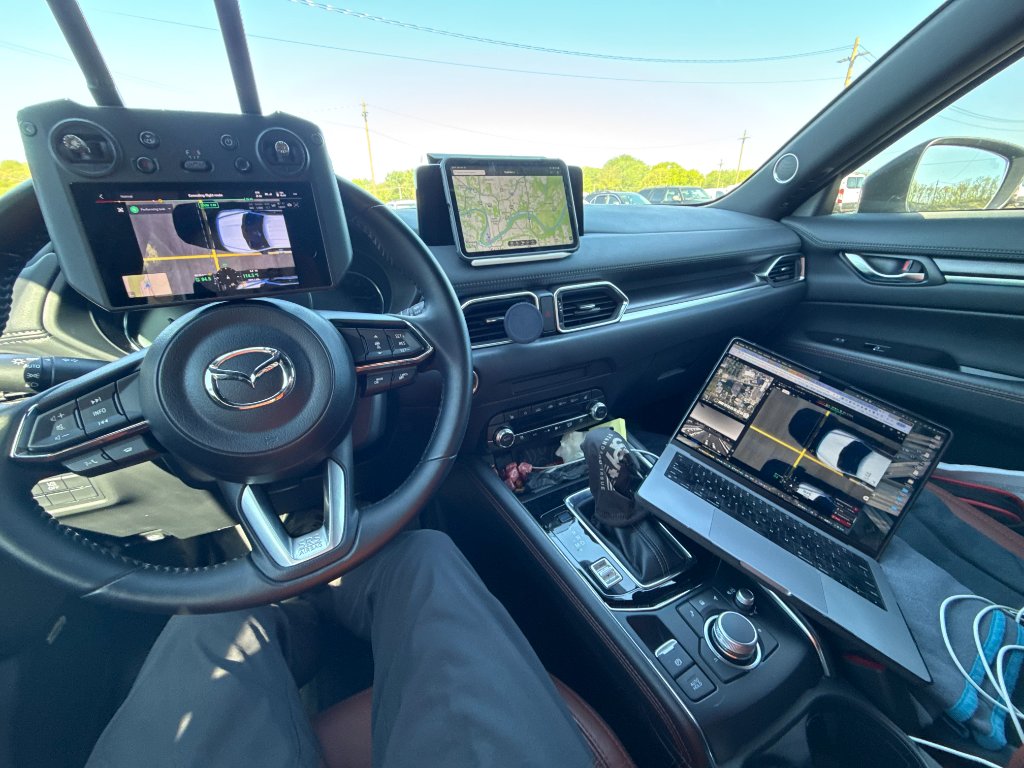
Operating safely also meant deciding when not to operate.
A daily program cannot define success as launching the aircraft regardless of conditions.
Weather, airspace restrictions, equipment status, site activity, or unresolved technical issues may make a planned operation inappropriate.
PAM’s field model treated a defensible no-go or delay as a valid operational outcome when conditions required it.
That principle separated productive persistence from pressure to fly.
The objective was not maximum activity at any cost. It was reliable execution within a decision structure that protected safety, compliance, equipment, and program credibility.
Seeing the whole operating picture.
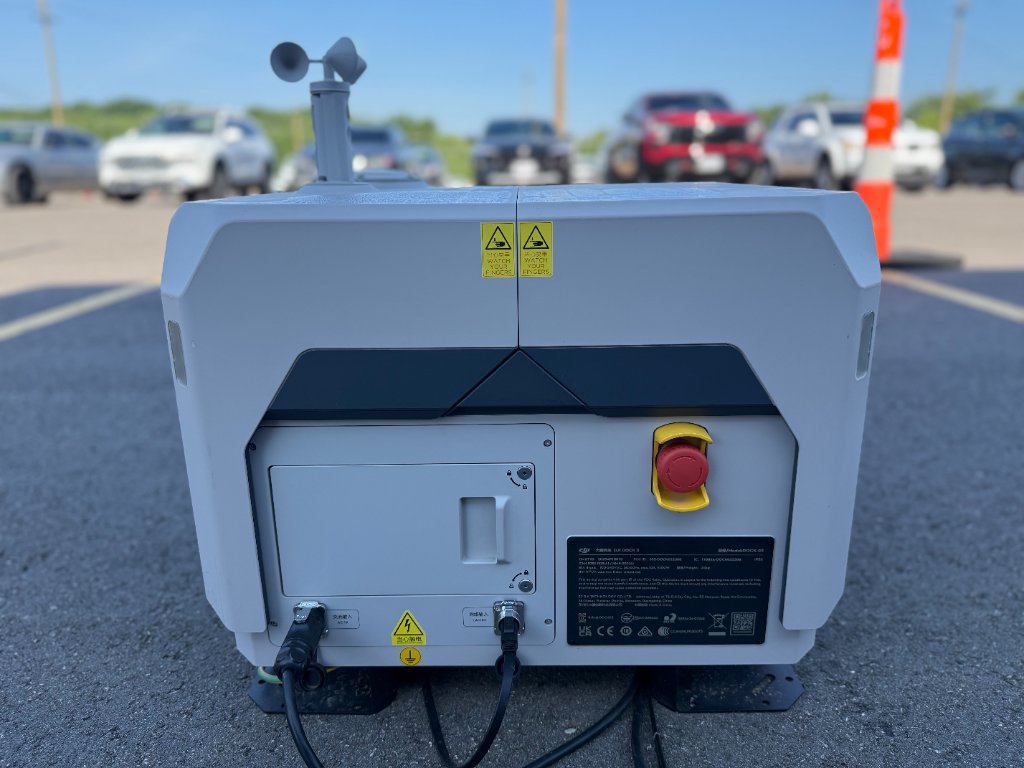
Sustained operations required more than monitoring the aircraft alone. Field decisions depended on understanding mission geography, aircraft state, dock condition, live imagery, communications, and active system exceptions in context.
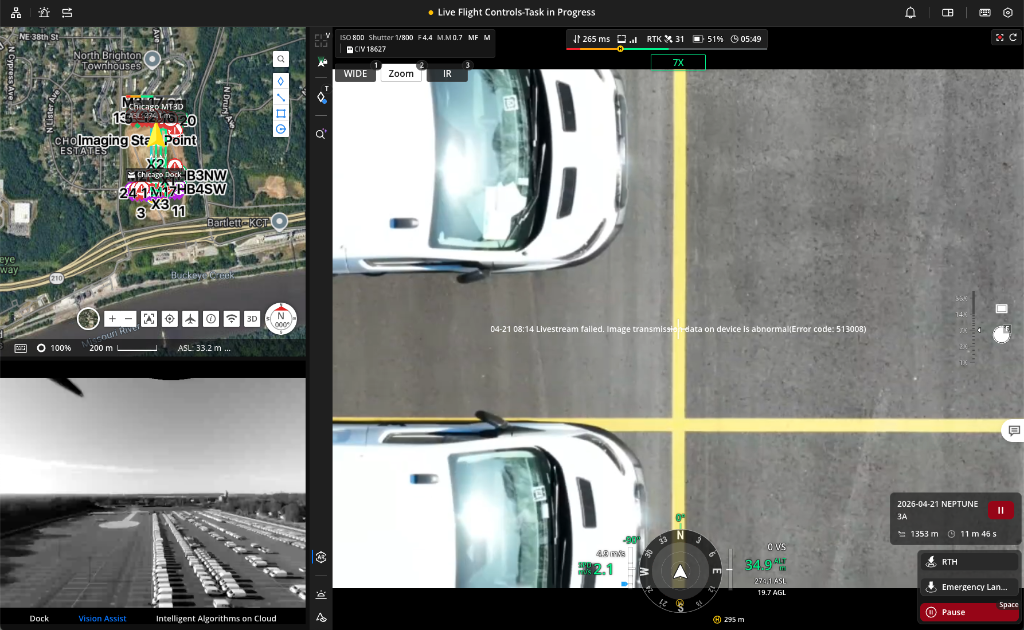
Live mission monitoring brought aircraft position, dock status, camera feeds, and system exceptions into one operating view, allowing field issues to be assessed in context rather than treated as isolated technical alerts.
A system exception did not automatically mean the same thing in every circumstance. The operational question was whether the issue affected safety, mission completion, data integrity, continued flight, or the next operating period.
PAM helped connect the technical signal to the appropriate operational response.
The system around the aircraft.
Readiness
Could the site, aircraft, equipment, weather, airspace, personnel, and supporting systems safely support the planned operation?
Risk review
What conditions could affect the mission, and what mitigations or operating limits were required?
Execution
How should daily service windows, site priorities, manual flights, automated missions, and data transfers be coordinated?
Troubleshooting
What was the effect of a network, dock, controller, positioning, or mission-transfer issue on continued operations?
Reporting
What happened, what changed, and what needed to be communicated?
Handoff
What did the next operating period need to know?
Closeout
Was the mission actually complete, or did it still require review, correction, escalation, or follow-up?
These were not administrative extras layered onto the flight. They were the mechanisms that allowed the flight operation to function as part of a larger enterprise program.
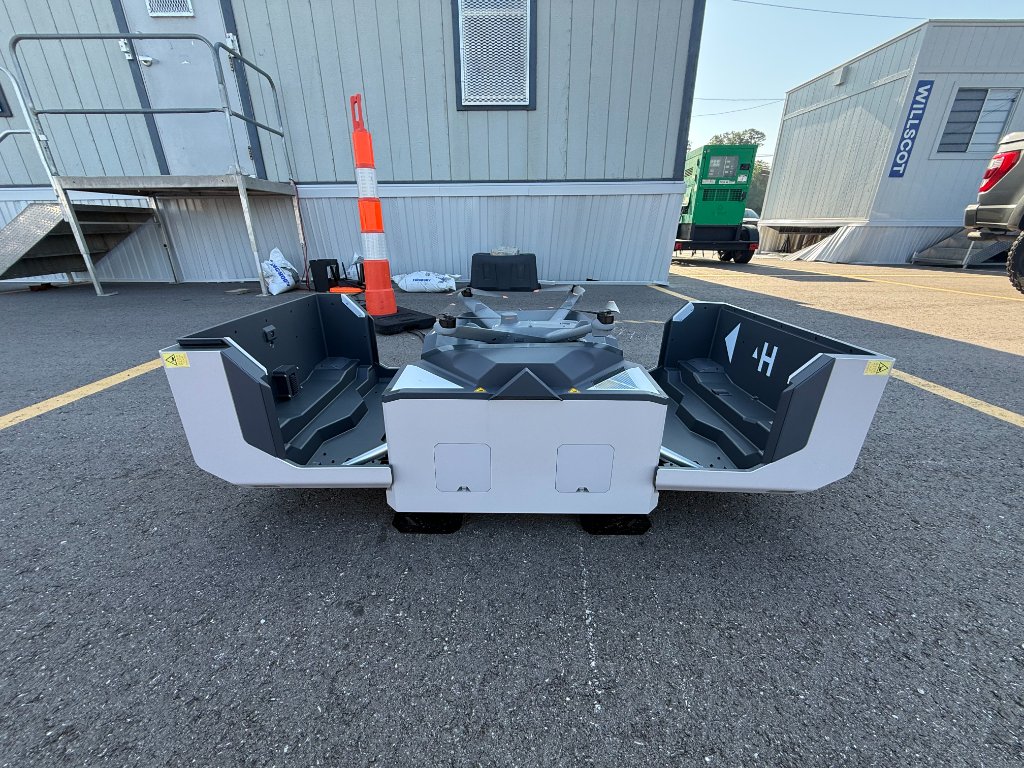
Fort Wayne tested whether the model could travel.
As enterprise priorities changed, the anticipated expansion shifted toward a Fort Wayne deployment. PAM supported a compressed two-week daily operation that brought many of the challenges of a longer deployment into a much shorter window.
Fort Wayne required the operating model to travel. The site, flight plans, access conditions, mission requirements, communications, and field rhythm were different. The deployment had less time to settle gradually into routine.
Could the practices developed during the sustained Kansas City sprint be adapted quickly to another active facility?
PAM supported site readiness, flight-plan adjustment, calibration and validation work, daily execution, post-flight documentation, troubleshooting, and closeout.
The compressed schedule also accelerated refinement of the tools surrounding the mission. Readiness checks, connected flight records, post-flight reporting, operational summaries, follow-up, and closeout became increasingly important when there was little room for information to drift between operating days.
Kansas City tested endurance.
Fort Wayne tested transferability.
What the program revealed.
Autonomy does not remove operational responsibility
Automated missions and dock systems can reduce direct pilot workload, but they do not eliminate readiness review, field oversight, troubleshooting, documentation, escalation, or accountability.
Technical availability is not operational readiness
An aircraft may report as available while the site, weather, airspace, network, dock, data path, or support team is not ready.
The operating model must travel
A process that only works at one familiar site is not a scalable enterprise model. Procedures, documentation, and responsibility boundaries need to survive changes in location and operating tempo.
Field issues need ownership
An unresolved issue cannot disappear into a message thread or depend on one pilot remembering it the next morning. It needs status, context, follow-up, and a responsible owner.
Pilot coverage and program support are different products
A pilot can complete assigned flights. Program support requires understanding how staffing, readiness, compliance, communications, documentation, technical escalation, and site expansion fit together.
From field workflows to Turris CTRL.
The program also exposed the limitations of managing operational continuity through disconnected forms, spreadsheets, messages, and individual memory.
PAM began connecting the tools developed during the deployment into a more coherent operational system. That work became part of the practical foundation for Turris CTRL.
Turris was not conceived as an aircraft-control platform. It grew from the need to manage the operating layer around distributed sUAS activity:
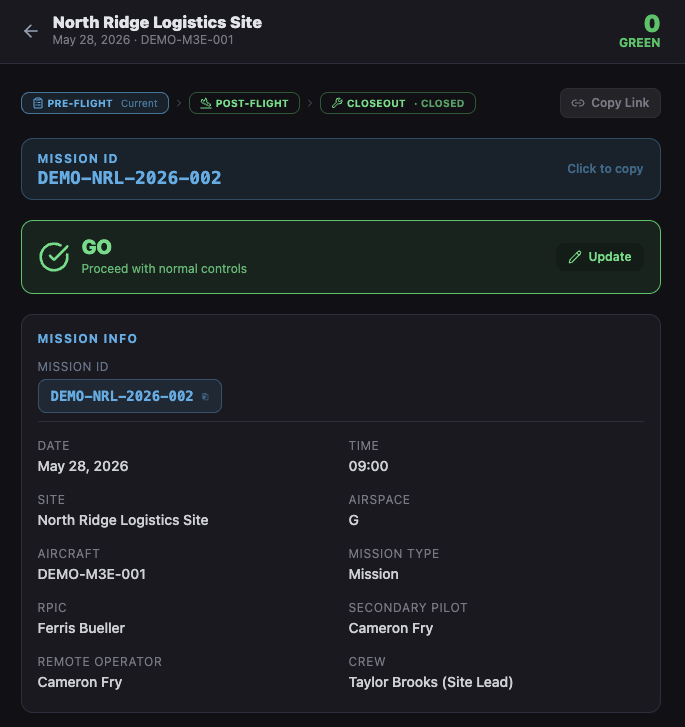
- ▪Preflight risk review
- ▪Aircraft and site readiness
- ▪Daily operational checks
- ▪Mission records
- ▪Post-flight reporting
- ▪Incident documentation
- ▪Follow-up
- ▪Handoff
- ▪Closeout and accountability
The product emerged from field conditions where those functions were not theoretical conveniences. They were necessary for continuity.
Explore Turris CTRLThe aircraft was only one part of the operation.
This program began with a proof of concept and evolved into a broader exercise in operational design.
PAM supported the aircraft, but also helped shape the structure surrounding it. That included the procedures used before launch, the decisions made during changing conditions, the response to field issues, the documentation preserved afterward, and the model used to carry operations from one site to another.
Enterprise drone capability becomes operational only when the organization around the aircraft is ready to support it.
PAM helped build and validate that operating layer.
Building a drone capability is one step. Building the operation around it is the real work.
PAM supports organizations moving from demonstration and isolated flight activity toward safer, more structured, and more repeatable sUAS operations.